

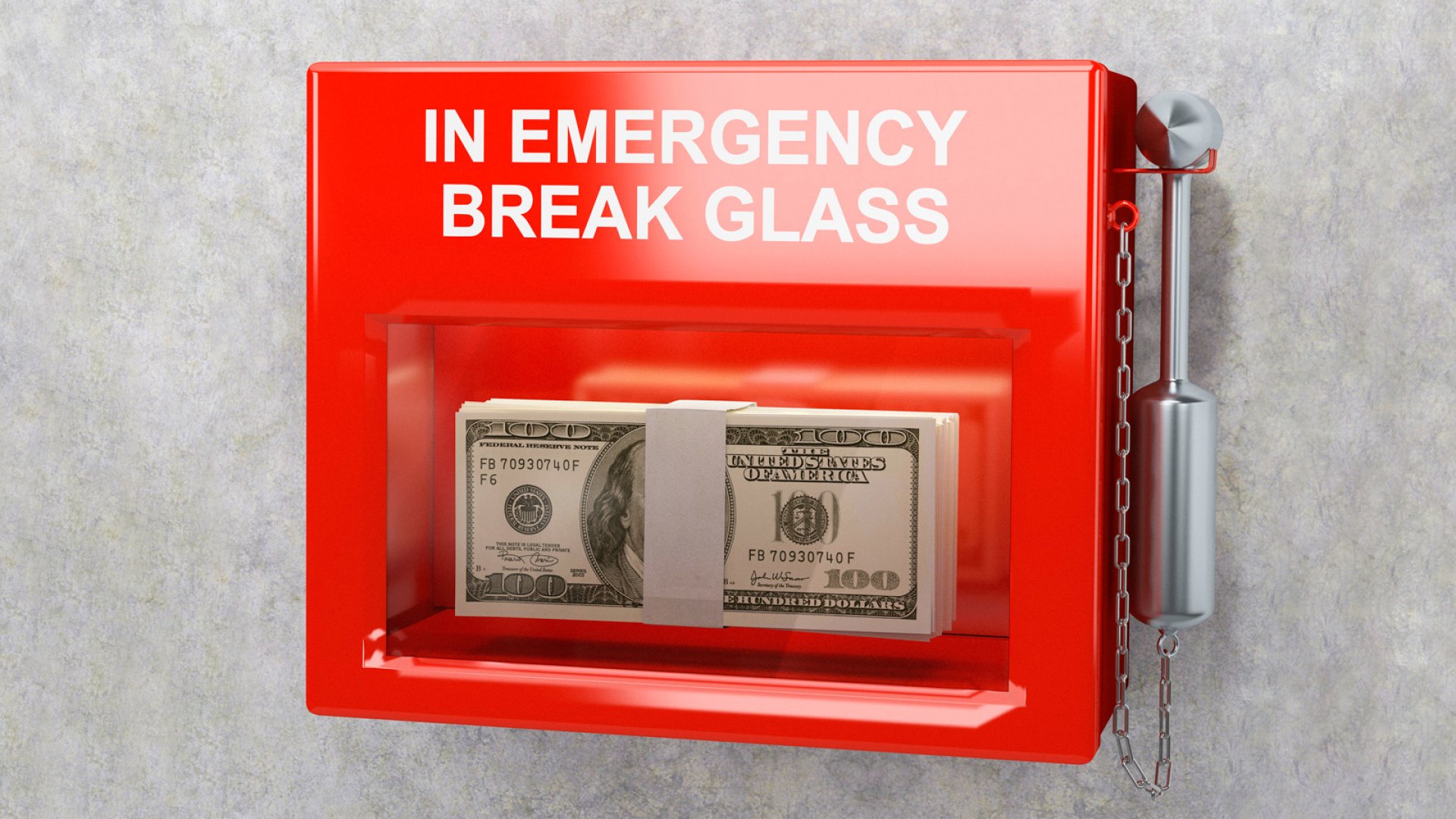
Planning for every outcome: the role of an emergency fund
An emergency fund is money set aside for an unplanned, necessary cost or a sudden drop in income. It is not a pot for a holiday, a planned annual insurance bill or a routine service; those are better handled by separate savings goals. Its practical job is to give you time and choices when the boiler stops working, a car needs a safety-critical repair, your hours are cut, or you need to move quickly.
For a UK household in 2026, the important questions are less about finding a “perfect” savings figure and more about matching the fund to real life: which bills must still be paid, how reliable income is, how quickly the money may be needed, and whether the chosen home for the cash is protected. An emergency fund cannot prevent a difficult event, but it can reduce the chance that one expense becomes expensive borrowing or missed priority bills.
This is general information, not personal financial advice. Savings rates, account conditions, tax rules, benefits and deposit-protection arrangements can change. The source links below were checked on 11 September 2026; check the current terms with the provider and the relevant official body before opening, moving or relying on an account.
What counts as an emergency — and what does not?
A useful test is whether the cost is both unplanned and important enough that delaying it would create a material problem. A failed fridge, urgent travel to support a close relative, a gap between jobs, an excess after an insured event, or a repair needed to keep a home safe may qualify. The precise answer is personal: someone who relies on a vehicle for work may reasonably treat a car repair differently from someone with reliable alternatives.
By contrast, predictable costs deserve their own “sinking fund”: a small pot built up for known future spending. Examples include Christmas, annual car insurance, school uniforms, birthdays, an MOT and service, a tenancy move, or a replacement appliance that is becoming unreliable. Separating these pots avoids repeatedly calling foreseeable spending an emergency and leaves the true buffer intact.
| Use of money | Usually an emergency-fund use? | Better planning response |
|---|---|---|
| Essential appliance fails without warning | Usually yes, if it is necessary and not covered elsewhere | Use the fund, compare repair and replacement options, then rebuild it. |
| Known annual premium or a booked trip | Usually no | Save a monthly amount in a named sinking fund. |
| Loss of earnings or a late payment from a client | Often yes | Use it for core costs while reviewing income, support and spending. |
| Discretionary sale, upgrade or treat | No | Wait or pay from a separate discretionary budget. |
| Cost covered by insurance, warranty or employer | Not necessarily | Check the policy or arrangement first; the fund may only need to cover an excess or timing gap. |
Why a cash buffer matters in 2026
Unexpected costs are not a sign that someone has budgeted badly. They are a normal feature of running a household. The value of a buffer is liquidity: money that is available when the decision has to be made. That can let you pay an essential bill on time, avoid relying on a costly form of credit, and concentrate on resolving the underlying problem.
It also provides decision time. When cash is immediately available, you may be able to obtain more than one repair quote, wait for a normal appointment rather than accept an expensive urgent option, or choose the least harmful response to a temporary income shock. It should sit alongside, not replace, insurance, a realistic budget and appropriate support when hardship arises.
MoneyHelper’s current UK guidance describes emergency savings as preparation for unexpected expenses and gives a rule of thumb of three to six months’ essential outgoings in an instant-access savings account. It also makes the more important point for anyone starting from zero: any amount can help, and regular saving within what you can afford is preferable to overcommitting. See MoneyHelper’s emergency-savings guidance (accessed 11 September 2026).
How much should you hold?
Start with essential monthly outgoings, not take-home pay
The popular “three to six months” range is a planning starting point, not a rule you have failed if you cannot meet it. Calculate the monthly amount needed to keep the household safe and functioning if income stopped temporarily. For many people, this includes rent or mortgage, Council Tax, gas and electricity, water, food, basic transport, phone or internet needed for work or essential contact, insurance, childcare that cannot be avoided, and minimum contractual debt payments. It does not automatically include every subscription, leisure cost or planned saving contribution.
Look at bank statements, bills and annual costs. Turn annual or irregular essentials into monthly figures where appropriate. For a couple, decide whether the fund covers shared bills only, each person’s personal costs too, or a period where one income disappears. A self-employed worker may need to allow for irregular receipts, business obligations and the time it takes to replace lost work, while keeping business and personal cash records distinct.
Choose a target range that fits your risk
| Situation | Illustrative planning approach | Questions to ask |
|---|---|---|
| Starting with little or no cash buffer | Set a first, modest milestone that would handle a common essential shock. | What single cost would cause the most immediate difficulty: an appliance, travel, a bill excess or a week of food? |
| Stable household income and dependable support network | Work progressively towards the lower end of a multi-month essentials target. | Could one income cover core costs temporarily? Is there insurance for major risks? |
| One income, variable hours, self-employment or insecure work | Consider a larger buffer, built in stages, because income may be less predictable. | How long has the longest payment gap been? Which bills continue even when work slows? |
| Dependants, health needs, costly travel or limited alternatives | Allow for the costs that would be hard to reduce quickly. | What must be paid to keep care, transport, heating or access to work in place? |
| High-interest or priority arrears | Do not automatically direct every spare pound to savings. | Would dealing with priority bills or expensive debt first prevent greater harm? Seek free debt advice if unsure. |
For example, if a household’s essential outgoings are £1,600 a month, a three-month reference point is £4,800 and a six-month reference point is £9,600. Those are calculations, not a recommendation that every household must save that amount. A smaller first goal may deliver much more practical protection than waiting until a distant final target feels possible.
Use stages so the goal stays usable
Breaking the target into stages turns an abstract number into decisions you can act on. You might first aim for enough to absorb a likely small emergency, then one month of essentials, then add further months as cash flow permits. Review the figure after a move, new child, job change, separation, reduction in work hours, insurance change or major rise in an essential bill. The right target is not fixed forever.
- Stage 1 — immediate resilience: build a small cash reserve that prevents a minor shock from disrupting food, travel or an essential bill.
- Stage 2 — one month of essentials: calculate and reach one full month of core outgoings.
- Stage 3 — tailored security: build towards a three- to six-month range, adjusting for household and income risk.
Where to keep an emergency fund
The primary criterion is not the headline rate. Emergency cash needs a home that is understandable, accessible when you need it and appropriately protected. A separate easy-access savings account can help prevent accidental spending while keeping the money available. Some current accounts also offer immediate access, but it is worth checking whether their interest, balance limits and other conditions suit the purpose.
Before choosing an account, read how withdrawals work. Check whether access is instant or delayed, whether there is a notice period, whether an account has a withdrawal limit or rate condition, whether transfers have daily limits, and how you would get money if your phone were lost or the app were unavailable. Keep the relevant security details safe, use strong unique passwords and make sure the account is in your name or arranged in a way that matches how the household will need to use it.
| Place for the money | Potential fit for an emergency fund | Checks before relying on it |
|---|---|---|
| Easy-access savings account with a UK bank or building society | Often suitable for the core fund because the purpose is accessible cash. | Withdrawal timing and limits, rate conditions, provider status and whether eligible deposits are protected. |
| Current account kept separate from spending money | Can be suitable for a small first-line buffer, especially where fast payment is important. | Whether the account makes the money too easy to spend; any balance or account conditions. |
| Notice or fixed-term savings account | Usually less suitable for the part you may need at short notice. | Notice period, loss of interest or other terms for early access. Keep immediate emergency cash elsewhere. |
| Cash ISA | May suit some people, but access and product terms remain decisive. | Withdrawal rules and the current ISA rules. Tax treatment alone does not make cash readily accessible. |
| Investments, shares or cryptoassets | Generally a poor home for money needed for a near-term emergency. | Values can fall and sale or settlement may not meet the timing of the emergency. |
| Cash kept at home | At most, a limited contingency amount for a short disruption. | Risks of loss, theft and fire; whether household insurance has any relevant limits or requirements. |
Check deposit protection, not just the brand name
As checked on 11 September 2026, the Financial Services Compensation Scheme (FSCS) says eligible deposits with UK banks, building societies and credit unions are protected up to £120,000 per eligible person, per firm. The limit applies across accounts with the same authorised firm, so several familiar brands can share a banking licence and therefore a single limit. The FSCS protection checker and the FCA Financial Services Register are practical ways to verify what sits behind a brand. Read the FSCS bank and savings protection checker and FCA Financial Services Register before depositing a significant amount.
Protection is not a reason to skip provider checks. The FSCS explains that it cannot protect e-money or payment-services firms as deposits, and that protection is at firm level. Do not assume an app, prepaid card, savings platform or familiar trading name has the same status as a bank account. Check the product’s current safeguarding or protection information, who actually holds the money and the official register entry. If you use a savings marketplace or cash platform, confirm how money is allocated and whether different accounts share a licence.
Think about tax without letting it obscure access
Interest on ordinary savings may be taxable, whereas interest in an ISA is generally tax-free. The effect depends on your wider income and tax position. GOV.UK states that the Personal Savings Allowance is up to £1,000 for basic-rate taxpayers, £500 for higher-rate taxpayers and £0 for additional-rate taxpayers; other allowances and rules can also matter. These are current terms rather than a promise about your position, so see GOV.UK’s savings-interest tax guidance and check the position for the relevant tax year before acting. For an emergency pot, access, security and suitability normally come before a marginal tax or rate difference.
How to build the fund without making the rest of the budget unsafe
A fund only helps if contributing to it does not cause missed priority bills, unaffordable debt repayments or a fresh borrowing problem. Start from a budget that reflects actual money in and money out. MoneyHelper provides a Budget Planner that can help identify regular commitments and room for saving. If the budget shows no spare money, the immediate task is to protect essentials and seek support where needed, not to force a transfer into savings.
- List core outgoings and income dates. Record the essentials, minimum payments and the dates they leave the account. Include annual bills as monthly amounts so a seemingly spare sum is not already committed.
- Choose a first target. Make it specific and reachable, such as the cost of a likely essential repair or a modest cash cushion. Name the target in the account if that helps keep its purpose clear.
- Automate a realistic amount. Set a standing order for just after income arrives, but choose an amount you can sustain. A smaller recurring transfer is more useful than an ambitious one that repeatedly has to be reversed.
- Direct irregular money deliberately. When a refund, overtime payment, gift or saved household cost appears, decide in advance what proportion goes to the fund and what must cover other needs. Do not treat uncertain future income as already saved.
- Reduce leakage before adding pressure. Review unused subscriptions, duplicate cover, avoidable fees and spending that genuinely does not serve a current need. Check any cancellation terms before ending a contract.
- Keep planned costs separate. Add named sinking funds for bills you know are coming. This prevents the emergency pot being emptied by annual expenses.
- Review every few months and after a change. Update the essentials figure, the target and the automatic transfer when rent, childcare, debt repayments or income changes.
Debt, benefits and hardship: when the order of priorities changes
Emergency saving is not a substitute for tackling a debt crisis. If you are missing, or think you may miss, rent or mortgage payments, Council Tax, energy bills, court fines, child maintenance or other priority commitments, get help early. MoneyHelper advises free and confidential debt advice if you are worried about missing a priority payment, have already missed one, or face an emergency such as enforcement action, disconnection or repossession. Its debt-help guidance and adviser locator are a sensible starting point; Citizens Advice’s debt guidance also explains how to identify debts that need urgent attention.
MoneyHelper notes that high-cost debt, unauthorised overdrafts, payday loans, home credit and mortgage arrears may make it cheaper in the long run to pay debt down before directing all spare money to savings. That is not an instruction to empty every last pound of cash: the right balance depends on the type of debt, the consequences of non-payment and your immediate risks. If the choice is unclear, use free debt advice rather than taking out new credit simply to preserve a savings balance.
If you claim Universal Credit and are waiting for the first payment, a Universal Credit advance may be available in some circumstances. It is an advance that normally has to be repaid, not a replacement for an emergency fund. GOV.UK says the amount depends on circumstances, the maximum is the first estimated payment, and repayment is usually within 24 months. Check current eligibility and the effect on later payments through GOV.UK’s Universal Credit advance guidance. Local welfare assistance and other support differ across the UK, so contact the relevant local authority, advice service or benefits office rather than assuming a scheme applies.
Using the fund well — and rebuilding it afterwards
Using an emergency fund for a genuine need is success, not failure. It has done the job for which it was built. Before paying, pause long enough to establish the immediate safety issue, the amount that must be paid now, any insurance or warranty route, and whether a less costly safe option exists. Keep invoices and note the amount withdrawn. This creates a useful record for insurance claims and shows whether the target needs adjusting.
- Use only the amount reasonably required for the event, while avoiding false economy where safety or essential services are involved.
- Where a bill can be discussed, contact the provider early and ask what help, payment arrangements or evidence it needs. Do not ignore reminders or court documents.
- After the event, recalculate the balance and restart the automatic transfer at a sustainable level. A temporary smaller transfer is still progress.
- Review the cause. If the withdrawal was for a predictable annual or ageing-item cost, begin a separate sinking fund so the emergency pot is better protected next time.
Common mistakes that weaken a UK emergency fund
Chasing a rate while giving up access
Rates and introductory terms change, and a higher rate can come with balance caps, qualifying transactions, notice requirements or reduced flexibility. For emergency money, compare the whole product: access, protection, limits, service and current terms. Do not move cash purely because a headline figure appears higher.
Assuming every digital-money product has deposit protection
Payment accounts, e-money wallets and cash-management services do not all work like bank deposits. Read the provider’s protection explanation and verify its status. The fact that a service is well known, advertises a card or displays an app balance does not establish FSCS deposit protection.
Keeping the fund too visible — or too hidden
Money mixed with daily spending can quietly be absorbed by routine purchases. Money placed behind a long notice period can be unavailable when it matters. A separate easy-access account with a clear name often provides a practical middle ground. Make a plan for access if the account holder is ill, travelling or unable to use their usual device.
Letting a planned expense drain the buffer
The solution is not to deny yourself all foreseeable spending. It is to price it, give it a due date and save separately. A calendar of renewal dates and a small monthly contribution can protect both the plan and the emergency fund.
A practical 30-minute emergency-fund check
- Calculate: write down one month of essential outgoings from statements and bills.
- Choose: set a first milestone and a later three- to six-month reference range that reflects your household risks.
- Separate: identify which upcoming costs need sinking funds rather than emergency money.
- Check: review the access conditions, account-holder details and protection status of the account you use.
- Automate: set a realistic standing order and a calendar reminder to review it.
- Prepare: save insurer, landlord or letting-agent, utility and employer contacts somewhere you can find them quickly.
- Escalate early: if core bills or debt are unaffordable, seek free debt or benefits advice rather than using more borrowing to paper over the gap.
The bottom line
A UK emergency fund is a cash buffer for a problem that cannot wait, not a measure of personal worth or a competition to reach a round number. Begin with the next realistic amount, base the longer-term target on essential outgoings, keep the core money accessible and check how it is protected. Build it slowly enough that the rest of the budget remains safe. If an emergency has already become a debt or arrears problem, the priority is early, free and independent support as well as a future savings plan.
Sources and further reading
The following authoritative UK sources were accessed on 11 September 2026. They should be checked again for current rules, eligibility, account terms and support availability.
- MoneyHelper — Emergency savings: how much is enough?
- Financial Services Compensation Scheme — Bank and savings protection checker
- Financial Conduct Authority — Financial Services Register
- GOV.UK — Tax on savings interest
- MoneyHelper — Budget Planner
- MoneyHelper — Help if you’re struggling with debt
- Citizens Advice — Help with debt
- GOV.UK — Apply for a Universal Credit advance or hardship payment